Posts

Arthur C. Barnett's Mysterious World

Image
There are mysteries around every corner. Anyone who tells you otherwise is a fool, a charlatan and/or Ezra Pound, without an ounce of poetry in their soul (I personally have 3.02 grams of poetry in my soul). With this in mind, I embarked on a patch expedition to get to the heart, of the kernel, of the crux of these riddles, that have puzzled precisely no-one since the dawn of time. Camera grasped to my sweaty palm like a diseased sailor (nonsensical similes ahoy) I embarked on the Odyssey of a Lunchtime, armed only with my ‘ weak lemon drink ’…and some clothes…and shoes…and the aforementioned camera. 'Giants Back-Alley' The first port of call was the conundrum, not known in these parts as ‘Giant's Back Alley’ (also ‘Large Person’s Lego’). These ‘building bricks’ were on a truly gargantuan scale, with a girth and breadth of...oh…easily…..that much. Did celebrity giant, Fin Mctool use this site as a dry run for his later piece – the famous ‘Causeway’. Is it perfor...

International Flight Arrivals

Image
My first Swallow on the patch was on 13th April - in Blue Peter style this is one I painted earlier As every schoolboy knows one Swallow doesn't make a summer. The Swedish schoolboy equivalent (we'll call him Lars) might say the same about one Starling. Equally the South African schoolboy (let's call him Eric Mortimore) might be sad to see the last of the winter visiting Swallows. Whether a bird is a summer visitor, a passage migrant or a winter visitor depends on your location - as well as the time of year.  This is true on a small scale as well. There are a number of species which wouldn't normally be considered summer visitors to Britain but ARE summer birds on the patch. I listen out for the return of the Dabchicks almost as keenly as the first Willow warbler. The pair's duet of winnying trills is a 'lovely lovely thing' (to quote Masterchef's very own John Torode). I hear them most mornings in late April and May, the remarkable thing is how...

Snipey Hat-Trick

Image
Common Snipe The recent deluges have turned parts of the patch into a mire of quag – in other places a marshy morass. On Monday morning I was picking my way through the puddlesome bog (enough synonyms already – ed), when a bird took off, almost from under my feet. I immediately recognised it as a Jack Snipe, distinguishable from  its common cousin by the much shorter beak, size, markings and behaviour.  I was delighted to encounter this scarce and elusive bird – a patch first. On Wednesday I had a similar encounter with a Common Snipe allowing me to compare the contrasting escape strategies of these two waders. The Jack Snipe is much harder to flush, relying on its camouflage – they will occasionally even, allow themselves to be picked up rather than take off. They rise silently and half-heartedly then drop down again, fairly nearby. The Common Snipe, on the other hand is “as flighty as a feather”, once flushed they shoot skywards, seemingly in pani...

Sterling Mosses

Image
In which area do the British Isles contribute most to the global fauna and flora? You could make a strong case for our wintering wildfowl and waders or our breeding seabirds, but take a look at this list - percentages of the world’s species which we have in Britain. Bryophytes: 7% Vascular Plants: 1% Fungi: 1% Mammals: 2% Birds (breeding): 2% Reptiles: 0.2% Amphibians: 0.3% Insects: 0.5% Arachnids: 0.6% (these figures are subject to caveats as discussed below 2 ) I vote for Bryophytes (and indeed would literally vote for a moss if one were to stand in a general election). Britain is a global hotspot for bryophyte diversity. With 65% of European species, but only 15% of vascular plant species, these figures are also impressive if looked at from a European perspective. There are some species which in Europe only grow in parts of the British Isles -  the next place they grow being the Himalayas or Tropics. They like it here as they really enjoy being cold, we...

Willow titivation

Image
Willow tit The Willow tit – the member of the Tit family that thinks it’s a woodpecker.  They prefer to hollow out the stump of an old, well-rotted tree – rather that going down the more conventional route of nesting in existing cavities. The D.I.Y. tit in fact. They are famously difficult to separate from Marsh tits and, in fact, ornithologists didn't realise there were two species until 1897. One difference however is the 'bull-necked' appearnce of the Willow. You don't get to do all that excavating without being a bit beefy in the neck region This year Willow tits successfully nested on the patch.  As it is a Red List species, with just 3,400 UK pairs – this is probably the patch’s star bird. With a view to helping them and hopefully increasing the population, I’ve been carrying out some D.I.Y. of my own.  I’ve been stalking the patch, power-drill in hand, like some crazed, latter-day…person with a drill. The Willow tit nesting box is filled with sawdust...

Into the unknown

Image
Clavicorona taxophila  - a very rare fungus - new for Lancashire - microscopic examination was necessary to clinch the indentification - kindly performed by Richard Shotbolt ('oil-filled gloeocystidia is good confirmation' - apparently).   This a Red Data List species. The last record on the FRDBI   database  is 9 yeas ago in Wiltshire. A small mammal scurried across a clearing in front of me – a Red Squirrel! If I’d spotted the Beast of Bodmin I’d have been only marginally less surprised (mainly because Bodmin is in Cornwall). I had been exploring an area of the patch that I normally  turn my nose at – what amounts to a small, unmanaged, wood comprised of Leyland Cypress.  I’d never seen any reason to actually venture in there, after all it’s only Leylandii – more famous  for being the weapon of choice  for ‘Neighbours from Hell’, than for having any wildlife value. My recent fungus forays, however, have sent me to previously unexplo...

The colours are all in your head man!

Image
The colours of a Kestrel are 'behavioural' - they are designed to effect the eyes, therefore the brains, therefore the behaviour of other animals - of other species - camouflage, and the same species - communication. Autumn is a time when, probably more than any other, we’re aware of colour in nature.   At the risk sounding like Philomena Cunk ….but what is colour?   The greenness of a leaf isn’t something inherent in a leaf - it’s a sense perception in the brain. Sunlight hits the leaf, chrolophyll absorbs certain wavelengths of light to produce sugars by   photosynthesis.   The wavelengths which aren’t   absorbed are reflected. This light hits our eyes when we look at a leaf, - the brain interprets this with a sensation of “green”.* Colours are things our brain invents – they help us make sense of, and navigate through the world. Our  brains are therefore measuring lengths - the wavelengths reflected by different objects in the world - th...

Lights, Camera, Spider

Image
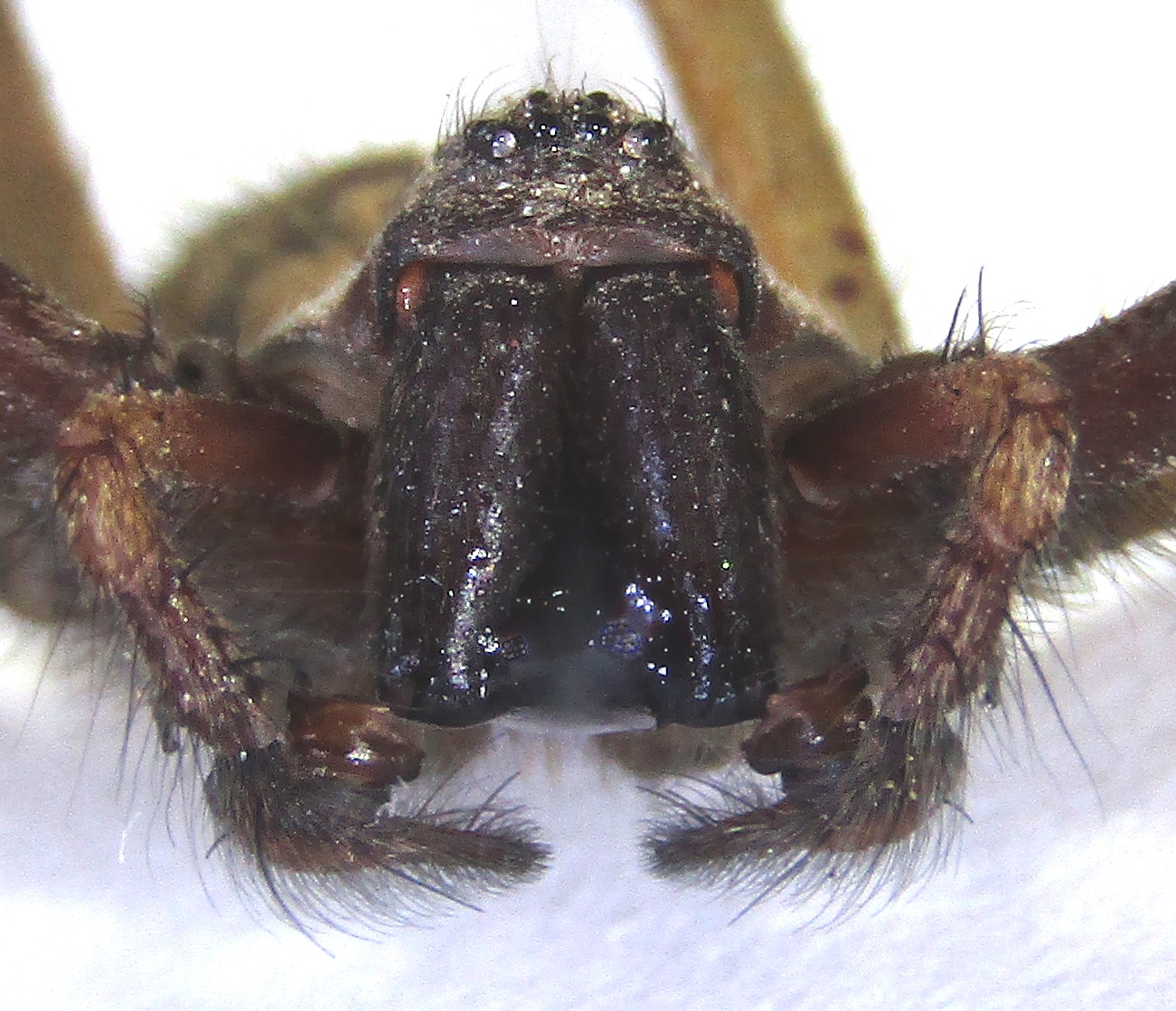
Giant House Spider -  (Eratigena atrica). The presence of palpal bulbs indicates that this is a male. These are used to transfer sperm to the female seminal receptacles during mating. Most of the  house Spiders that are found in houses in autumn are males searching for females. Father Ted: "OK, one last time. These are small  (holds up toy cows)... but the ones out there (points out of the window) are far away. Small... far away... (Dougal shakes head in confusion) ah forget it!” See the excerpt here I can imagine Father Ted would have an even harder time trying to explain these spider close ups. Father Ted: "This is small  (points to spider)... but this one (points to the photo) is highly magnified. Small... magnified... (Dougal shakes head in confusion) ah forget it!” My makeshift spider 'studio' Garden Spider (Araneus diadematus). The protruding structure at the base of the abdomen is the epigyne. This is used to receive  and d...